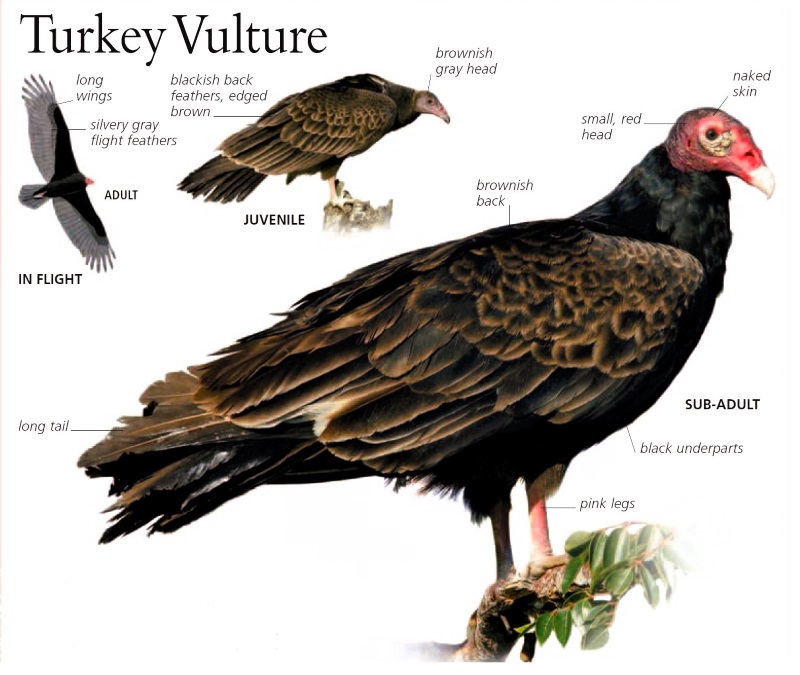
Turkey Vulture: Range, Behavior, Diet, and Unique Survival Traits
Tauheed Ahmad Nawaz
The Turkey Vulture is the most widely distributed in North America. It is found in most of the United States and has expanded its range into southern Canada. It possesses a better sense of smell than the Black Vulture, which often follows it and displaces it from carcasses. The Turkey Vulture’s habit of defecating down its legs, which it shares with the Wood Stork, may serve to cool it or to kill bacteria with its ammonia content.
VOICE: Usually Turkey Vulture is a silent bird, but it will hiss at intruders and also grunt.
FLIGHT: Its flight is seldom flapping, mostly soaring with wings held in a V-shape, gently tipping from side to side.
NESTING: Dark recesses, such as under large rocks or stumps, on rocky ledges in caves, and crevices, in mammal burrows and hollow logs, and abandoned buildings; 1–3 eggs; 1 brood; March–August.
FEEDING: Turkey Vulture mainly feeds on a wide range of wild and domestic carrion, mostly mammals, also birds, reptiles, amphibians, and fish; occasionally takes live prey such as nestlings or trapped birds. Turkey Vultures often spread their wings to sun themselves and increase their body temperature.
OCCURRENCE: Turkey Vulture generally forages and migrates over mixed farmland and forest; prefers to nest in forested or partly forested hillsides offering hidden ground protected from disturbance; roosts in large trees such as cottonwoods, on rocky outcrops, and on power line transmission towers; some winter in urban areas and near landfills.