


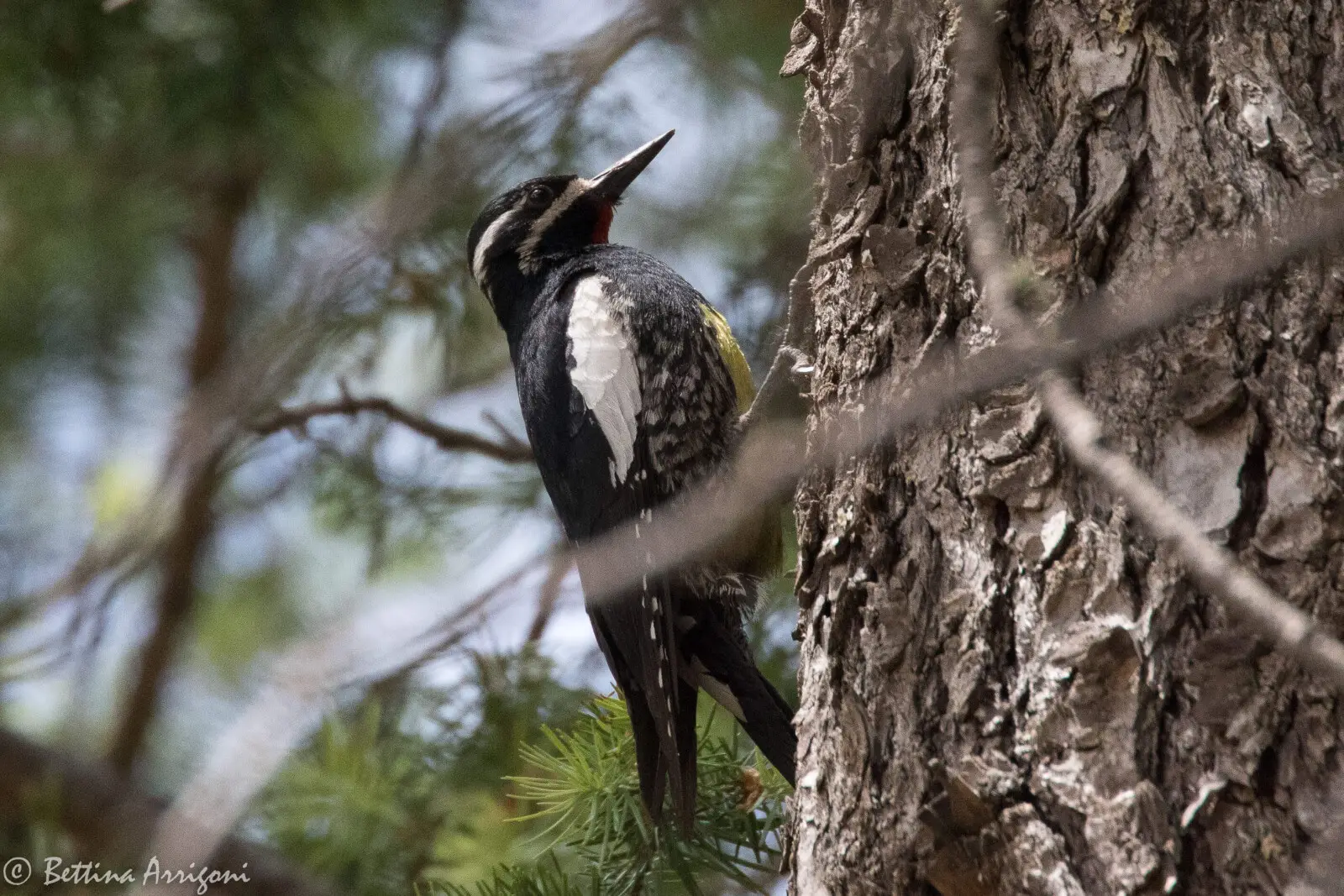
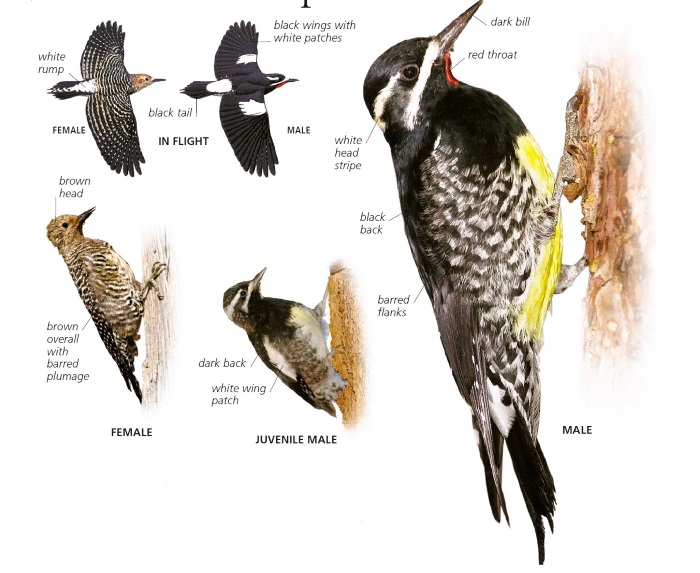
The Williamson’s Sapsucker (Sphyrapicus thyroideus) is one of the four sapsucker species occurring in North America. Unlike other sapsuckers, the male and female plumages are so dissimilar that it is difficult to believe they belong to the same species. The species has very specific habitat needs, partly because of its dependence on the sap and phloem, the innermost bark layer of trees. This secretive sapsucker can be located in the breeding season by its rather hesitant drumming, which occurs in an uneven series. With its white rump, the female looks like a flicker in flight.
VOICE: Williamson’s Sapsucker’s primary call is a nasal churr; also a mewing call.
NESTING: Williamson’s Sapsucker excavates a cavity in dead wood; lays 5–6 eggs; 1 brood; May–July.
FEEDING: This bird mainly eats tree sap and ants during the breeding season; nonbreeding birds feed on the sap, phloem, and fruit of trees.
FLIGHT: Williamson’s Sapsucker has an undulating flight pattern, similar to other sapsuckers. These birds drill holes in tree bark and then eat the sap and insects that emerge.
Occurrence: This is a species of the Intermountain West, breeding in coniferous forests. Winters at lower elevations, where it mainly occupies pine-oak woodlands, in the southeastern United States and in Mexico.
Order: Piciformes
Family: Picidae
Species: Sphyrapicus thyroideus
Length: 9in (23cm)
Wingspan: 17in (43cm)
Weight: 13⁄4 oz (50g)
Social Pairs Lifespan: Unknown
Status: Declining

Read More: Imperial Woodpecker