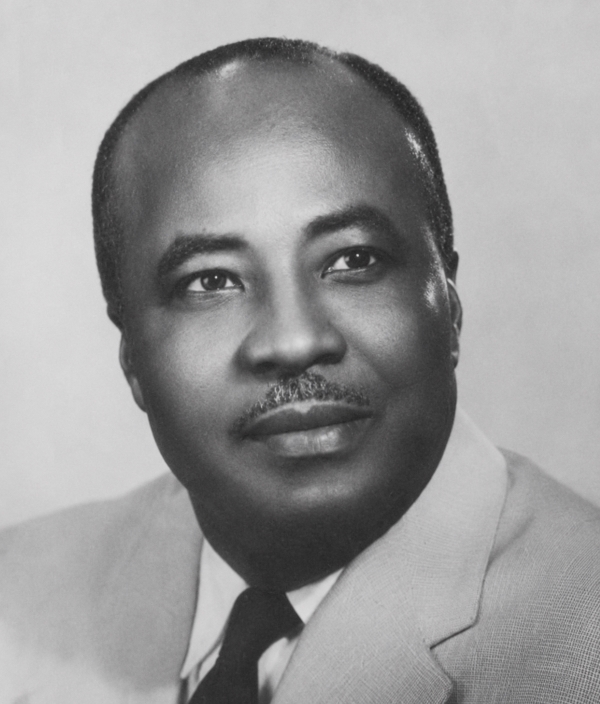
The life of Rev. Edward T. Graham:
During his long tenure as pastor of the historic Mt. Zion Baptist Church, located at 301 N.W. Ninth Avenue in Overtown, Rev. Edward T. Graham earned widespread attention and respect as a leading voice in the struggle for equal rights and opportunities for Miami’s Black citizens. He played key roles in numerous campaigns for change in the Miami area, including the integration of Miami’s lunch counters, golf courses, buses, and public parks; the desegregation of Dade County beaches and Miami Beach hotels; the founding of Miami’s chapter of the Urban League; bringing Florida Memorial College to Miami; and organizing the Franklin Savings and Loan Association. A Miami Herald editorial once referred to him as “the original civil rights spokesman in this area.”
A native of Beaufort County, South Carolina, Rev. Graham graduated from Benedict College in 1928 before moving to New York, where he earned a master’s degree in sociology from Columbia University in 1929. He held several clerical and professional positions in New York during the 1930s before moving to Miami in 1943 as executive director of the United Service Organization (USO). Later, he founded the Negro Service Council, a precursor to the Urban League, where he eventually served as executive director from 1945 to 1948. He became a licensed preacher at Mt. Zion Baptist Church and was ordained in 1947.
In 1948, when Rev. Edward T. Graham succeeded the popular Mt. Zion pastor, Mt. Zion had 416 members. By the time he retired as pastor in October 1976, the membership had grown to just over 1,400, reflecting his years of dynamic leadership. Rev. Edward T. Graham was recognized for using his position to advance the cause of Black people by forming networks with white ministers and congregations willing to pursue legal and local efforts to desegregate public accommodations and expand economic and educational opportunities for Miami’s Black citizens. For this, he was fondly raised by some as a visionary progressive and widely regarded by many as a “Communist” or “Uncle Tom.”
After taking leadership roles in numerous campaigns to open public facilities and institutions to Black residents in Miami, Rev. Graham reflected on the challenges he had faced. “I decided the real answer to the Negro’s situation lies in getting him into the mainstream of American economic life,” he once told a reporter. He helped organize the Franklin Savings and Loan Association, overcoming fierce opposition from federal officials who saw no need for a Black-oriented financial institution.
When he and his colleagues recognized that there were not enough qualified Black applicants to operate the institution, Rev. Edward T. Graham began looking into relocating Miami’s Florida Memorial College, a Baptist-related, historically Black college then situated in St. Augustine. He served the college as chairman of the board of trustees and received an honorary doctorate from the institution in 1965.
Rev. Edward T. Graham also held public office, serving terms on the city and county commission. During his service to the city, he became vice mayor of the commission.
Before Rev. Edward T. Graham’s death in March 1987, Rev. Graham held membership in numerous civic and service organizations, ranging from the executive committee of the National Council of Churches to the citizens’ advisory board for the public television channel, WPBT.
Read More: History of the Pequot Tribe